
Case study: Capturing a family’s generation of stories
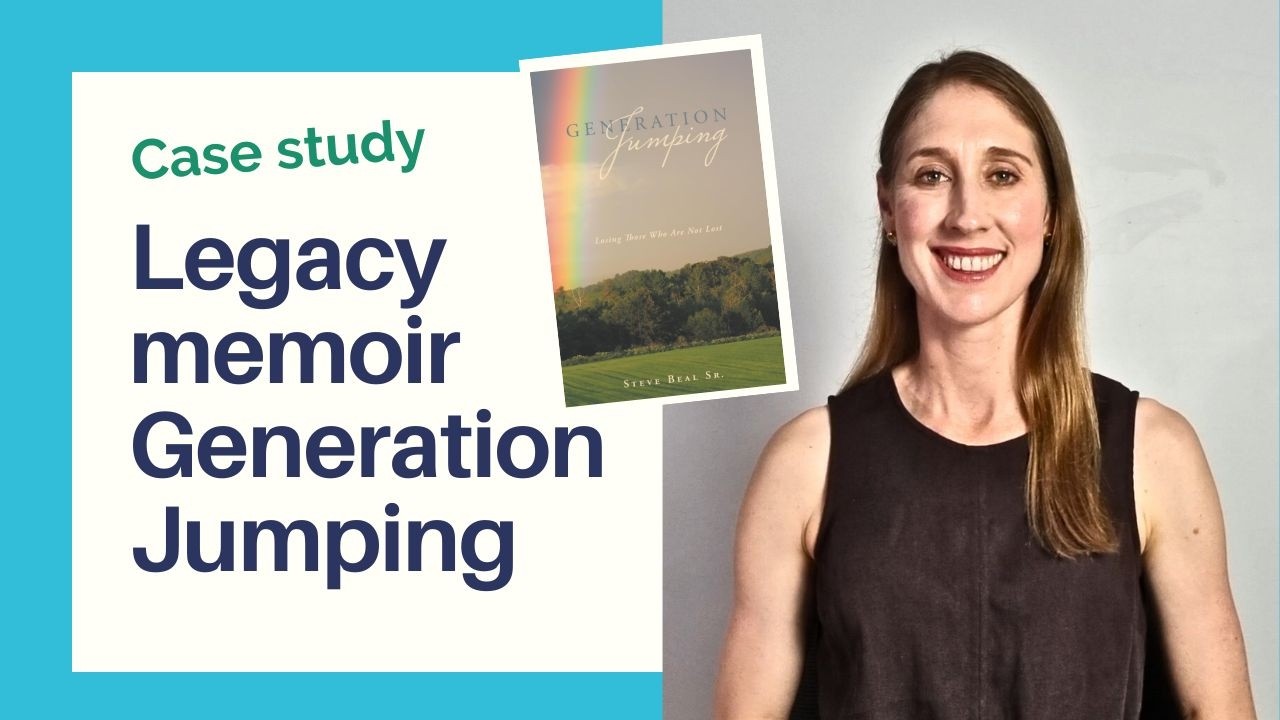
Generation Jumping: Losing Those Who Are Not Lost by Steve Beal Senior urges us all to tell our family stories today.
In this WestBow Press memoir, the American honours ordinary heroes such as his grandmother, uncle and father.
And by sharing their stories plus some of his own, he uncovers timeless lessons about love, hope, grief and faith.
So keep reading to find out more about Beal, what prompted his writing and his top tips for your own creating…
Related article – Publishing: The ultimate guide to publishing a life story
Steve Beal Snr’s Generation Jumping
Guided by faith
To begin with, I cannot tell my story without mentioning God’s provision for me, which is incalculable and miraculous. Not to mention, humbling.
As a matter of fact, I was born in the USA when my Dad drove my Mum over the border in a middle-of-the-night ice storm from the Peterson farm in New Brunswick, Canada, to Caribou, Maine.
What’s more, it was Christmas time and I was a month early.
Also I was born into a family of Beals and Petersons, all of whom loved Jesus and lived their lives in accordance with His teachings.
So I grew up in New Hampshire, accepted Jesus as my Lord and Savior at a young age, loving and playing sports.
Certainly I went my own way for a number of years but God never left me.
Later, when I slowly turned back toward Him, I was welcomed with loving, gracious arms.
Related article – Once A King, Now A Prince: Wild rock and roll music memoir by New York agent Ira Blacker
Vowing to forge legacy
Today, I have six kids, a family that is my love and joy, and I write and speak with a humble, pastoral voice, sharing stories the only way I know how: with truth, authenticity and intentionality. God. Family. Country.
Generation Jumping is a raw, urgent memoir about bridging generational divides before the voices of a lifetime slip into silence.
At 17, I witnessed my grandmother’s funeral.
In short, it was a bittersweet celebration where grief dissolved into laughter.
But when my Uncle Carl died suddenly in 2008, the void left behind sparked a vow: “It’s our turn to forge legacy.”
Years later, as my father’s final breath stole his words but not his hope-filled smile, that truth became my mission.
Why start this life story?
A close friend inspired me after he had gone through the process of writing his own book.
For years, I had taken notes and made records of visits to family, doctors and hospitals but the thought of a book never crossed my mind.
Then, as I lost more and more loved ones, a sense of urgency began to weigh heavily on me.
Next I walked away from a part-time job because I wanted more out of my exchange of time.
While I searched for another job, I gathered notes and eulogies to begin a manuscript, determined to tell the stories of my loved ones before their generation was gone.
Fortunately my friends and family were supportive.
Indeed, in the nearly 20 months I worked on Generation Jumping, I only told a handful of people that I was even writing it at all.

How Generation Jumping came together
Daily ritual pays off
The process ran from roughly February 2024 to October 2025.
In short, planning Generation Jumping was pretty much just committing to writing one sentence a day, which in most cases led to much more.
Also I went in chronological order of loss.
Certainly the compilation was difficult; I still don’t think I did very well with the writing or the compilation but I saw it through.
Related article – Painful stories: How to write about sad memories and hard conversations
Writing around the ‘hard part’
Without question, the hardest part was writing about my Dad.
Even though I had delivered his eulogy years earlier and written page after page about him over the years, I found that re-visiting those scenes was the last thing I wanted to do.
For months, I found every excuse to “not get to my writing today”.
In the end, my strategy to overcome this was to start writing a finish, essentially skipping the hardest part for a while.
This ended up making it easier to see the whole picture and tie everything together.
Realising rewards
The most rewarding part of Generation Jumping is ongoing.
The first joys were the celebration with my wife and my family.
Their simple congratulations let me know they were proud that I saw the project through.
However, the pinnacle was handing a signed copy of the book to my Mum. There were tears.
She was my fact-checker (even though I didn’t tell her about the book for the first year or more).
Importantly she was also the sense of urgency for me to get this done before her generation was gone.
Another incredible moment was when my Aunt Donna in New Brunswick, Canada – whose husband, my Uncle Carl, is the subject of Chapter 2 – wrote me a lovely letter on Christmas paper about what the book meant to her.
Related article – Family stories: Bonus reasons to talk about family history and ancestry
Teachings from Generation Jumping
Favourite part of the life story?
My favorite part of Generation Jumping is the Prologue, which goes back to being the kid among the adults.
Indeed I still feel like I should be at the kids’ table.
It’s about the old days, the times of our lives.
Certainly I love the reminiscing of the stories and the memories, both as a kid among them and as the adult alongside them.
In short, this is truly generation jumping, the term I coined in 2013.
Pointers for fellow life-story creators
Firstly, be completely honest and as optimistic as possible.
Secondly, write to remember. Remember to write.
However, don’t be alarmed when writing makes you recall countless things you can’t believe you didn’t remember in the first place.
So add them in, and keep writing.
Finally, the writing process is the joy really; like most workouts and training, while difficult at times, you’ll wish you weren’t done when you finish.
Related article – How to get your own book printed without stressing!
Final say
Generation Jumping: Losing Those Who Are Not Lost by Steve Beal Senior is a heartfelt memoir about the final days of several family members, including his own dad.
Inspired by family funerals that felt more like celebrations, it reminds us that “life is short – share stories and memories before they are gone”.
So grab a paperback or digital copy today from Beal’s website.
Also read more and connect with Beal through Facebook and LinkedIn.
Happy writing!
*Please note: This article may bring up difficult thoughts or feelings associated with loss. Please contact your doctor or health professional for help that suits your specific circumstances. Further resources: Beyondblue, Lifeline Australia.
Free gift!
Get instant access to my step-by-step training library, interview guide and a supportive community inside the Forever Young Autobiographies Membership. Join the next live Q&A member call for free and let’s start preserving life stories together. Start your free month!
Your say
Do you have a favourite childhood memory of being with extended family or seated at the “kids’ table” like Beal? I’d love to hear your thoughts. Send me an email or leave a reply in the comments section at the end of this article.
Get in touch
Have you hit a roadblock planning, creating, polishing or finishing your life story? Let me know so I can help!
Don’t miss an article
Know when new material is published. Sign up.